


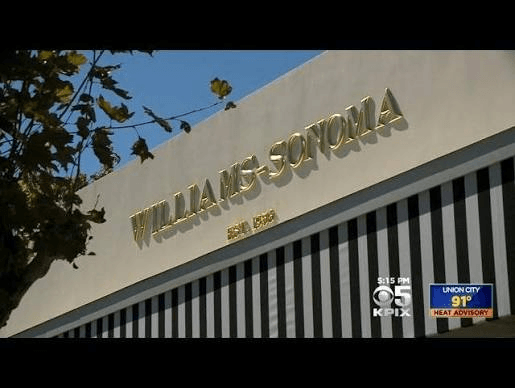
If you’ve walked past a “Store Closing” sign at your local Williams Sonoma recently, or read about the San Francisco flagship shutting down, it’s easy to wonder if the whole company is in trouble. The short answer is no — but the longer answer is worth understanding.
This article breaks down what’s actually happening: which stores are closing, why they’re closing, and what it means for you as a customer.
Williams-Sonoma, Inc. Is Not Going Out of Business
Let’s start with the most important point. Williams-Sonoma, Inc. is a publicly traded company. It is not in bankruptcy, not in liquidation, and has not announced any plans to shut down.
The company operates roughly 625 brick-and-mortar stores and ships products to more than 60 countries. It also runs several well-known brands beyond the Williams Sonoma kitchenware stores you might be thinking of — including Pottery Barn, Pottery Barn Kids, PBteen, West Elm, Mark and Graham, and Rejuvenation.
That brand diversity matters. Revenue is spread across multiple lines of business. When a handful of Williams Sonoma kitchenware locations close, that doesn’t reflect the financial health of the entire parent company.
Closing a store in a mall and closing a company are two very different things.
Which Stores Are Actually Closing — and Why
The closures that have people asking questions are real. But each one has a specific, local reason behind it.
San Francisco Union Square Flagship
The most high-profile closure is the three-to-four-story Williams Sonoma at 340 Post Street in San Francisco. The store has been open since 2003, and it’s closing in early 2026. This one is drawing extra attention because it’s the last Williams Sonoma location within San Francisco city limits.
The reason it’s closing has nothing to do with the company struggling. Chanel purchased the building for approximately $63 million and plans to open its own flagship store there. Williams Sonoma didn’t walk away — it was priced out by a luxury brand that wanted the real estate.
There are still Williams Sonoma locations throughout the Bay Area, including Walnut Creek, San Ramon, Corte Madera, San Mateo, Palo Alto, and Santa Clara. The brand isn’t leaving the region.
Bay Street Mall, Emeryville, CA
The Williams Sonoma at Bay Street Mall closed on January 19. The store had been there since the mall opened in 2002. Customers were directed to the Walnut Creek location. Again, this looks like a straightforward lease or mall economics decision — not a company-wide retreat.
Temecula Promenade Mall, CA
The Temecula location is also closing. According to employees at the store, a significant rent increase was cited as the reason. The store ran deep markdowns ahead of the closure. This is a lease economics decision, full stop.
Clinton, CT Outlet
The only Williams Sonoma outlet store in Connecticut, located in Clinton, closed on January 19. A sign on the door confirmed the closure. This was an outlet location — a different format from the main retail stores — and its closure doesn’t point to anything broader happening with the chain.
The pattern here is clear. Each closure has its own cause: a building sold to a competitor, a rent hike, a lease expiration, or low foot traffic. None of them signal a company-wide shutdown.
Store Closures vs. a Company Shutdown — What the Difference Looks Like
It helps to know what a real “going out of business” situation actually looks like — because it doesn’t look like this.
When a retail chain is genuinely failing, you see bankruptcy filings, chain-wide liquidation sales hitting every brand and every location, mass layoffs across all divisions, and official statements about winding down operations. None of that is happening at Williams-Sonoma, Inc.
What is happening is routine retail pruning. Leases expire. Rents go up. Foot traffic shifts. Buildings get sold. Retailers make location-by-location decisions based on whether a specific store is still worth operating. This is normal business management, not a death spiral.
The Union Square closure is actually a good example of the opposite of failure. Chanel paid a premium for that building. Williams Sonoma didn’t go broke and vacate — a luxury competitor outbid the market for the real estate.
For context, Banana Republic closed locations on Chicago’s Magnificent Mile and in Stamford and Harrisburg without shutting down as a brand. The same logic applies here. Closing a specific store is not the same as closing the company.
If you want accurate information about Williams-Sonoma’s corporate health, skip the Reddit threads and clearance sale photos. Go directly to the company’s investor relations page or look for formal press releases. That’s where real business decisions get documented.
When “Closing” Doesn’t Actually Mean Closing
There’s another layer of confusion worth addressing. Sometimes a store running clearance sales and telling customers it’s “closing soon” isn’t actually shutting down permanently — it’s relocating.
This happened in Greenville, South Carolina. A Williams Sonoma there ran deep discounts, posted “all sales final” notices, and told customers the store was closing soon. Shoppers assumed it was gone for good. It wasn’t. The store was moving to a standalone building nearby.
Clearance sales, “all sales final” policies, and closing-soon signage show up during relocations just as much as permanent closures. Without an official statement from the company, it’s hard to tell the difference just from walking past the window.
The San Francisco Union Square closure is confirmed permanent — Chanel is taking over the building. But for other locations, it’s worth checking directly with the company before assuming your local store is gone for good.
You can verify any store’s status through the Williams Sonoma store locator on their website, or by calling the location directly.
What This Means If You’re a Customer
If your nearest Williams Sonoma is closing, here’s what you practically need to know.
Your gift cards and store credits remain valid. They work chain-wide and online, so they don’t disappear when a single location closes. The same applies to registries and warranties — those are managed at the corporate level, not the store level.
When a store closes, the company typically directs customers to the nearest open location or to the online store. You saw this at Bay Street Mall, where signage pointed shoppers to Walnut Creek. Returns and exchanges can generally be handled at other locations or processed through the website.
If you relied on a specific store for in-person shopping, the honest inconvenience is that you may need to drive further or shop online instead. That’s a real change, but it’s not the same as the brand disappearing.
For ongoing coverage of retail trends and business decisions that affect consumers and business owners alike, TheBizAgenda covers these shifts in straightforward terms.
The Bigger Retail Picture
Williams Sonoma’s store closures are happening inside a wider pattern affecting many established retailers. High-rent urban locations — especially in places like San Francisco’s Union Square — have seen multiple well-known tenants leave in recent years. It’s not unique to one brand.
Luxury brands like Chanel are moving into prime spots, pushing out retailers who can’t justify the rent at those locations. Mall foot traffic in many areas is down from pre-pandemic levels. E-commerce continues to take a bigger share of retail spending. These are industry-wide pressures, not company-specific failures.
Many retailers are actively choosing to close underperforming or expensive locations and put more resources into their online channels or into better-positioned standalone stores. That’s a strategic adjustment, not a collapse.
The Bottom Line
Williams-Sonoma, Inc. is not going out of business. It operates hundreds of stores across multiple brands, serves customers in over 60 countries, and continues to trade publicly with no bankruptcy or liquidation filings.
Specific Williams Sonoma locations are closing — in San Francisco, Emeryville, Temecula, and Clinton, CT — each for their own local reasons tied to real estate, rent, or lease decisions. That’s normal retail management.
If you see a “closing” sign at a store near you, check the company’s website or call the store before drawing conclusions. It might be a permanent closure, a relocation, or something in between. The only way to know for sure is to check the source directly.
The company still exists. Your gift cards still work. The brand isn’t going anywhere as a whole — it’s just making location-level decisions like any large retailer does.
Also Read This:
