


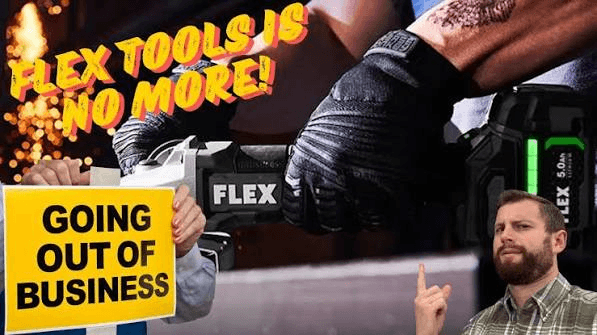
If you recently walked into a Lowe’s and couldn’t find a single Flex tool on the shelf, you’re not alone — and you’re probably not crazy for wondering whether the brand is finished. The rumor spread fast. Social media posts, YouTube videos, and forum threads all started asking the same question: is Flex Power Tools going out of business?
The short answer is no — not based on any confirmed evidence. But the longer answer is more useful. This article separates the verified facts from the speculation, explains what actually happened at Lowe’s, and tells you where Flex tools can still be found today.
Flex Power Tools Has Not Filed for Bankruptcy or Announced a Shutdown
Let’s get this out of the way first. As of the latest available reports, there is no verified bankruptcy filing, liquidation announcement, or formal closure connected to Flex Power Tools. None of the credible sources covering this story show evidence of insolvency proceedings.
The going-out-of-business claim started largely from social media posts and YouTube commentary — not from any official company statement. One YouTube video titled “FLEX TOOLS GOING OUT OF BUSINESS?!?!” explicitly framed the shutdown claim as a rumor, not a confirmed fact.
That distinction matters. A brand disappearing from one retail chain and a brand shutting down entirely are two very different things. Confusing the two is a common mistake, but it leads to a very wrong conclusion.
The honest status right now: Flex appears to be under significant retail distribution pressure, particularly at Lowe’s. That is a real problem for the brand. But it is not the same as the company being dead.
What Lowe’s Actually Did With Flex Tools
Here is what the evidence actually shows. Going into 2026, Lowe’s removed the majority of Flex cordless power tools and accessories from its physical store shelves. If you walked into your local Lowe’s looking for a Flex drill or battery pack, there was a good chance you found nothing.
Some Flex products — specifically Stack Pack storage items — continued to appear on the Lowe’s website even after the in-store removal. Reports also conflict on exactly how complete the online pullback was. Some sources said Flex disappeared from Lowe’s website entirely at one point, while others noted listings later returned.
ToolGuyd, which covers the tool industry closely, reported that Lowe’s had largely purged Flex cordless listings but that Stack Pack items were still showing up online. At least one source noted that some Flex listings came back on Lowe’s website after a temporary disappearance.
What this tells you is that the situation is fluid, not final. This is not a clean, announced exit. It looks more like a retailer adjusting what it stocks, with some product categories surviving the cut and others not.
Why Lowe’s Removed Flex From Shelves
This is where the business explanation matters. Lowe’s did not pull Flex because the tools stopped working or because customers flooded the store with complaints about quality. According to one source that covered the story directly, the removal was tied to Lowe’s internal performance metrics and store economics — not product defects.
That is a normal retail dynamic, even if it stings for the brand on the receiving end. Retailers constantly evaluate which products earn their shelf space. They look at how fast a product sells, how much margin it generates, and whether it fits their current category priorities. A brand can make good tools and still lose aisle position if the sales velocity doesn’t justify the space.
What appears to have happened is that Lowe’s shifted Flex toward online-only availability or more specialized, pro-focused distribution rather than keeping it in general consumer retail. That is a channel strategy decision. It does not mean the tools failed and it does not mean the company collapsed.
Think of it this way: a supplier losing shelf space at one major retail chain is similar to a business losing one major client. It is disruptive and it creates real problems. But it is not automatically a death sentence if the company has other sales channels in place.
Why Shoppers Assumed the Worst
It is worth understanding why this rumor spread so quickly, because the same pattern shows up in other industries too.
When a major retailer removes a brand from shelves, most shoppers have no visibility into the business reason behind it. A missing product looks exactly the same whether the cause is bankruptcy or a routine channel shift. From the customer’s perspective, the shelf is just empty.
Facebook group discussions showed shoppers and even store associates giving completely contradictory accounts. Some said Flex was online only. Others said their store still carried it. Others said it was completely gone everywhere. That kind of inconsistency is not evidence of chaos at Flex headquarters — it is what a phased or uneven retail transition looks like from the ground level.
YouTube videos added to the confusion. Titles like “The FLEX Situation Just Got Worse” created urgency without always separating what was confirmed from what was speculative. The result was a fast-moving story that felt more certain than the actual facts supported.
One useful comparison: a band that stops touring one major venue chain but keeps releasing music and performing elsewhere. Fans who only went to that venue chain might think the band broke up. But the band is still active — just not in the place where those fans were used to seeing them.
Where Flex Tools Can Still Be Purchased
If you want Flex tools and your local Lowe’s doesn’t have them, you still have options. Based on available reports, Flex products have continued to appear through several other channels:
- Lowe’s website: Some listings, particularly Stack Pack storage products, have remained available online even when physical stores went bare.
- Acme Tools: Named specifically in sources covering Flex’s availability outside Lowe’s.
- Ohio Power Tool: Another outlet cited as a place where Flex remained available.
- Amazon: Also mentioned as a channel where Flex products could still be found.
Availability may vary depending on when you’re reading this, since the situation has been shifting. It is worth checking multiple channels rather than assuming a product is discontinued just because one store stopped carrying it.
If you already own Flex tools and are worried about batteries or accessories, that is a practical concern worth monitoring. But as of the available evidence, the brand has not announced that it will stop supporting existing product lines.
What This Means for Buyers and the Brand
For anyone who owns Flex tools or is considering buying them, here is the practical takeaway.
Losing Lowe’s shelf space is a serious blow for any brand. Lowe’s is a massive retail channel, and losing in-store visibility means fewer impulse purchases, less brand awareness for new customers, and a harder road to growing the user base. That is a real business challenge, not a trivial one.
At the same time, many tool brands operate successfully through specialty retailers, online channels, and professional distribution without needing a spot in a big-box consumer store. Whether Flex can make that transition successfully is a legitimate question — but it is a different question from whether the company has already failed.
For business owners tracking this type of story, it is a good reminder that retail channel exits and company failures are easy to confuse from the outside. If you follow distribution changes in your own industry, the same misreads happen regularly. A vendor going quiet on one platform does not mean the vendor is gone. It often means the vendor is shifting how it reaches customers.
If you want to follow developments like this across industries, TheBizAgenda covers business changes, brand decisions, and market moves with the same practical lens.
The Bottom Line
Flex Power Tools is not confirmed to be going out of business. No bankruptcy filing, no liquidation announcement, and no official shutdown notice has been reported by credible sources. What happened is that Lowe’s significantly reduced or removed Flex cordless tools from its physical stores going into 2026, with some online availability remaining and the situation continuing to shift.
The rumor spread because a brand disappearing from a major retailer looks, from the outside, exactly like a company closing. But those are two different things. Flex appears to be dealing with a real distribution challenge, not a confirmed collapse.
If you need Flex tools, check Acme Tools, Ohio Power Tool, Amazon, or the Lowe’s website directly. And if you see a headline claiming a brand is “dead” because it left one store chain, it is worth digging deeper before accepting that conclusion.
Also Read This:
