


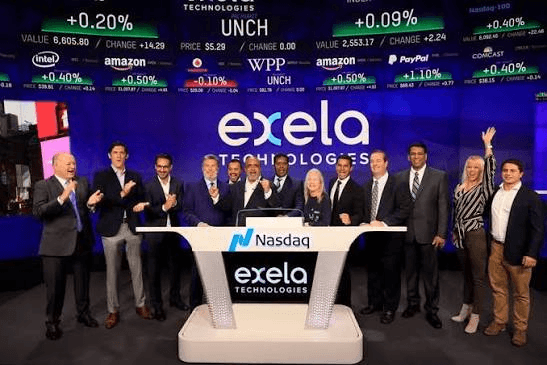
Exela Technologies has made some alarming headlines recently. Nasdaq delisting notices, Chapter 11 filings across dozens of subsidiaries, and roughly $1.3 billion in debt — taken together, that sounds like a company on its last legs.
But the reality is more complicated than the headlines suggest. If you’re a customer wondering whether your contracts are at risk, an employee unsure about your job, or an investor trying to make sense of what happened to the stock, this article breaks it all down in plain language.
The Short Answer: Distressed, Not Definitively Closed
Exela is not confirmed to be shutting down or liquidating. That distinction matters.
The company is in severe financial distress. But financial distress, restructuring, and delisting are three separate events that happened close together. When they stack up like that, it’s easy to read them as one fatal outcome. They’re not.
Based on available information, Exela’s filings and restructuring were framed around reorganization — keeping the business alive — not around winding it down and selling off the parts. That could change, and the situation is still evolving. But “going out of business” and “going through a painful restructuring” are not the same thing.
What the Chapter 11 Filings Actually Cover
The most important thing to understand about Chapter 11 is what it is not. It is not a business shutdown. That’s Chapter 7, where a company stops operating, sells its assets, and closes for good.
Chapter 11 is a reorganization process. A company files to get legal protection from its creditors while it works out a plan to restructure its debts and keep operating. Think of it less like a store putting up a “closed forever” sign and more like a business negotiating with its landlord and lenders under court supervision to avoid collapse.
In Exela’s case, approximately 60 subsidiaries filed for Chapter 11. That sounds dramatic, and the scale is significant. But subsidiaries filing for reorganization is not the same as the entire enterprise shutting down. The parent company and its operating structure are not automatically eliminated by these filings.
The restructuring also came with debtor-in-possession (DIP) financing and exit financing. Both of those are standard tools for companies that intend to keep running through the process and emerge on the other side. Lenders don’t typically extend that kind of financing to companies they expect to liquidate.
The goal of the restructuring, according to available reporting, was to eliminate more than $1.1 billion in funded debt. That’s not a company waving the white flag. It’s a company trying to survive by cutting its debt load down to something manageable.
Why Exela Was Delisted from Nasdaq
Exela received a delisting notice after failing to meet Nasdaq’s minimum market value requirement. This is a compliance trigger. Nasdaq has specific financial standards that listed companies must maintain, and when a company falls below them, delisting follows.
After delisting, shares are expected to trade on OTC Markets — the over-the-counter market. Trading on OTC is legal and still happens, but it comes with less visibility, lower liquidity, and generally weaker investor confidence than a major exchange listing.
A simple way to think about it: being delisted from Nasdaq is like being moved from a major international airport to a small regional terminal. The flights still exist, but far fewer people pass through, and it’s harder to get where you want to go quickly.
What delisting does not mean is that the company stopped operating. It does not cancel customer contracts. It does not eliminate employees. It does not mean the business shut its doors. It means the stock became harder to trade and the company lost a significant credibility signal in the public markets.
That’s a serious blow — especially for a company already carrying heavy debt — but it’s a different kind of problem than insolvency or closure.
How Exela Got Here — Debt, Operations, and Cyberattacks
The $1.3 billion debt figure is the central issue. Everything else connects back to it.
Exela’s business model involves large-scale business process outsourcing — document management, payment processing, healthcare administration, and similar services. These are not high-margin businesses, and they require significant operational infrastructure to run. Carrying $1.3 billion in debt on top of that kind of business is unsustainable if revenue softens even slightly.
Post-pandemic revenue decline contributed to the deterioration. As clients adjusted their own operations and spending, the pressure on Exela’s ability to service that debt increased.
A ransomware attack added further operational stress. Cyberattacks are expensive — they disrupt services, trigger recovery costs, and can damage client relationships. For a company already stretched thin financially, the timing made things worse.
But the cyberattack did not cause this situation on its own. The debt structure and the revenue decline are equally significant factors, if not more so. The ransomware attack was one problem layered on top of others that were already serious.
The combination — high fixed debt, shrinking revenue, and operational disruption — is what pushed the company toward restructuring rather than any single dramatic event.
What This Means for Shareholders, Employees, and Customers
Shareholders
Shareholders face the most direct downside here. When a company goes through debt restructuring, common equity typically ends up at the back of the line. Creditors get paid first. Shareholders often see their stakes heavily diluted or reduced in value.
The Nasdaq delisting compounds this. Shares trading on OTC markets are harder to sell, attract fewer institutional buyers, and carry more risk. If you’re holding XELA stock, the realistic picture is difficult. Recovery for common shareholders in restructuring scenarios is possible but historically uncommon without significant dilution.
Employees
For employees, the more pressing questions are about continuity. Chapter 11 reorganization does not automatically result in mass layoffs or facility closures. Companies that go through restructuring often continue operations with the same workforce during the process.
That said, restructuring does typically involve cost reduction, which can include workforce changes. The honest answer is that the situation carries real uncertainty. Watching for official communications from the company and monitoring progress through the restructuring process is the most practical approach.
Customers
Customers using Exela’s services should monitor the situation closely but do not necessarily need to act immediately. Companies in Chapter 11 continue to operate and fulfill contracts — that’s part of the point of reorganization. Disrupting client relationships during restructuring would make the business even harder to save.
The practical risk for customers is disruption if the restructuring fails and moves toward liquidation. If Exela is managing critical processes for your business, it’s worth evaluating your contingency options. Not because closure is confirmed, but because the situation carries enough uncertainty that preparation is reasonable.
If you’re assessing your own business’s exposure to partners or vendors in financial distress, resources like TheBizAgenda cover practical frameworks for evaluating that kind of third-party risk.
The Bottom Line
Exela Technologies is in serious financial trouble. The debt load is massive, the stock was delisted, and dozens of subsidiaries went through Chapter 11. None of that is minor.
But “serious trouble” and “out of business” are not the same outcome. The restructuring was designed to reduce debt and preserve operations, not to wind the company down. DIP and exit financing suggests there was at least a plan to keep the business alive through the process.
Whether that plan succeeds depends on factors that are still playing out — creditor negotiations, market conditions, and the company’s ability to stabilize revenue. The situation remains uncertain and worth watching closely.
If you are a shareholder, the outlook is difficult. If you are an employee or customer, the key question is not whether the stock is on Nasdaq — it’s whether the operating business can make it through restructuring intact. Right now, that question doesn’t have a definitive answer, but it’s the right one to focus on.
Also Read This:
