


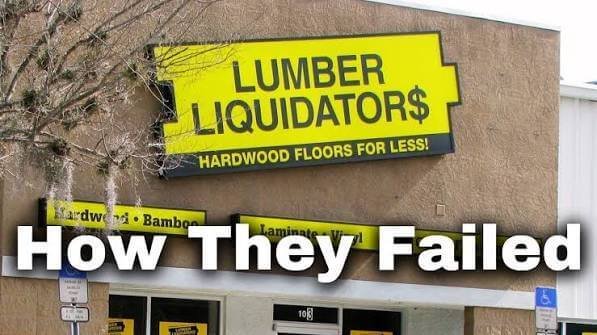
If you walked past a store with a “Going Out of Business” banner or saw headlines about bankruptcy and mass closures, it’s fair to assume the chain was finished. But the reality is more layered than that — and worth understanding if you’re a customer, a competitor, or just someone following the story.
Here’s a clear breakdown of what actually happened: what triggered the bankruptcy, what the “winding down” announcement really meant, how a last-minute deal changed the outcome, and what the situation looks like today.
The Company Behind the Headlines — Lumber Liquidators vs. LL Flooring
First, a quick clarification on the name confusion. Lumber Liquidators and LL Flooring are the same company. The business started as Lumber Liquidators, a U.S. specialty retailer selling hard-surface flooring — hardwood, laminate, vinyl, tile, and related accessories.
In 2022, the company rebranded to LL Flooring. The goal was to distance itself from a damaging scandal tied to the original name (more on that below). Then, after a 2024 acquisition, the surviving stores rebranded back to Lumber Liquidators by October 2024.
Same core business, same product line. The name changes reflect ownership shifts and reputation management — not a separate company.
What Led to the Chapter 11 Bankruptcy Filing
On August 11, 2024, LL Flooring filed for Chapter 11 bankruptcy protection. By that point, the financial picture was rough. Net sales had dropped 21.7% year-over-year to $188.5 million. The stock had fallen 53.5%, trading around $0.60 per share.
Several factors contributed. Inflation squeezed consumer budgets. Spending on home improvement dropped as the housing market slowed. People weren’t buying homes, renovating as often, or replacing floors at the same rate as in prior years.
There was also the long shadow of the 2015 60 Minutes investigation, which alleged that certain Chinese laminate flooring sold by Lumber Liquidators contained dangerous levels of formaldehyde. The fallout — lawsuits, regulatory scrutiny, settlements, and years of negative press — did lasting damage to customer trust.
That scandal didn’t single-handedly cause the 2024 bankruptcy, but it weakened the brand significantly over time. Combined with broader market headwinds, the company couldn’t sustain its earlier footprint.
It’s also worth clarifying: Chapter 11 is a reorganization process, not automatic liquidation. When a company files Chapter 11, it’s asking a court for protection while it restructures its debts and operations. Closure isn’t guaranteed.
The “Winding Down” Announcement and Why It Spread So Fast
After filing Chapter 11, LL Flooring announced it was winding down all operations. The company had tried to find a buyer and failed — at least initially. With no deal in place, the plan was to run liquidation sales across hundreds of stores and close everything within roughly three months.
That announcement is the direct source of most “Lumber Liquidators is going out of business” headlines. And at that moment, those headlines were accurate. The company had publicly stated it was shutting down.
The problem is that most of those headlines didn’t get updated when events changed — which they did, quickly.
The Last-Minute Acquisition That Changed the Outcome
Shortly after the winding-down announcement, a buyer emerged: F9 Investments, a private equity firm led by Thomas Sullivan — the original founder of Lumber Liquidators.
The deal covered 219 stores, a Virginia distribution center, intellectual property, and other business assets. The court approved the acquisition on September 16, 2024. By October 2024, the surviving stores had been rebranded back to Lumber Liquidators.
The company did not disappear. It shrank significantly and changed hands, but the brand and a large portion of its retail presence continued operating.
The founder’s involvement is notable. Sullivan built the original business, and his return through F9 Investments suggests a deliberate attempt to rebuild around the original brand identity rather than simply extract value from the remaining assets.
Which Stores Closed and Which Stayed Open
This is where it gets practical. At the time of the Chapter 11 filing, LL Flooring was operating somewhere between 300 and 400 locations across the U.S. After the restructuring, the picture split into two categories:
- 219 stores were acquired by F9 Investments and continue operating under the Lumber Liquidators name.
- 211 stores were slated to close — including 117 where closing processes had already started, and 94 that were already mid-closure when the Chapter 11 filing happened.
So when someone sees a “Going Out of Business” banner at their local store, that store is almost certainly one of the 211 being closed. But that doesn’t mean the entire chain is gone. Roughly half the footprint survived under new ownership.
If you’re unsure about a specific location, the most reliable step is to check the current store locator on the Lumber Liquidators website or look for recent local news about that particular store.
What This Means for Customers
The answer depends on which type of store you’re dealing with.
If your local store is closing
You may see deep discounts during the liquidation sale — that’s standard practice when a retail location winds down inventory. However, returns, warranties, and gift card redemptions can get complicated at closing locations. If you have an unresolved issue, try to contact the reorganized company directly or visit one of the operating stores.
If your local store is still open
The 219 remaining stores are operating under the Lumber Liquidators brand as part of the restructured business. New purchases, warranties, and returns should follow normal company policies — though it’s worth confirming details directly with the store or the corporate website, since policies can shift during restructuring periods.
On the formaldehyde question
Some customers still ask whether it’s safe to buy from Lumber Liquidators. The original issue was tied to specific laminate flooring products sourced from China in the years leading up to the 2015 investigation. Regulatory actions followed, and current flooring products should meet applicable safety standards. If you’re concerned, check for product certifications at the time of purchase and ask the store directly about sourcing.
The Broader Business Lesson Here
This situation follows a pattern common in retail restructuring. A chain with too many locations, declining sales, and accumulated reputational damage reaches a breaking point. Chapter 11 gives it a chance to reset — not always by saving everything, but by cutting what’s unprofitable and preserving what can still work.
Lumber Liquidators went from 400+ locations to roughly 219. That’s a significant contraction, but it’s also a strategy. Smaller footprint, lower overhead, and a founder back at the helm is a different business than the one that filed for bankruptcy in August 2024.
Whether it works depends on execution — and on whether the brand can rebuild trust after years of scandal and financial instability. For more analysis on how businesses navigate restructuring and brand recovery, visit TheBizAgenda.
The Bottom Line
Lumber Liquidators — operating as LL Flooring and now rebranded back — is not completely gone. The “going out of business” headlines were based on a real announcement, but they didn’t reflect the full outcome.
Here’s the short version: the company filed Chapter 11 in August 2024, announced it was shutting down, then secured a last-minute acquisition from a firm led by its original founder. Around 219 stores continue operating. Around 211 are closed or closing.
If you see a closing banner at one location, that’s real — for that location. But the brand itself is still in business, just smaller and under new ownership. Whether that’s enough to turn things around is still an open question.
Also Read This:
